
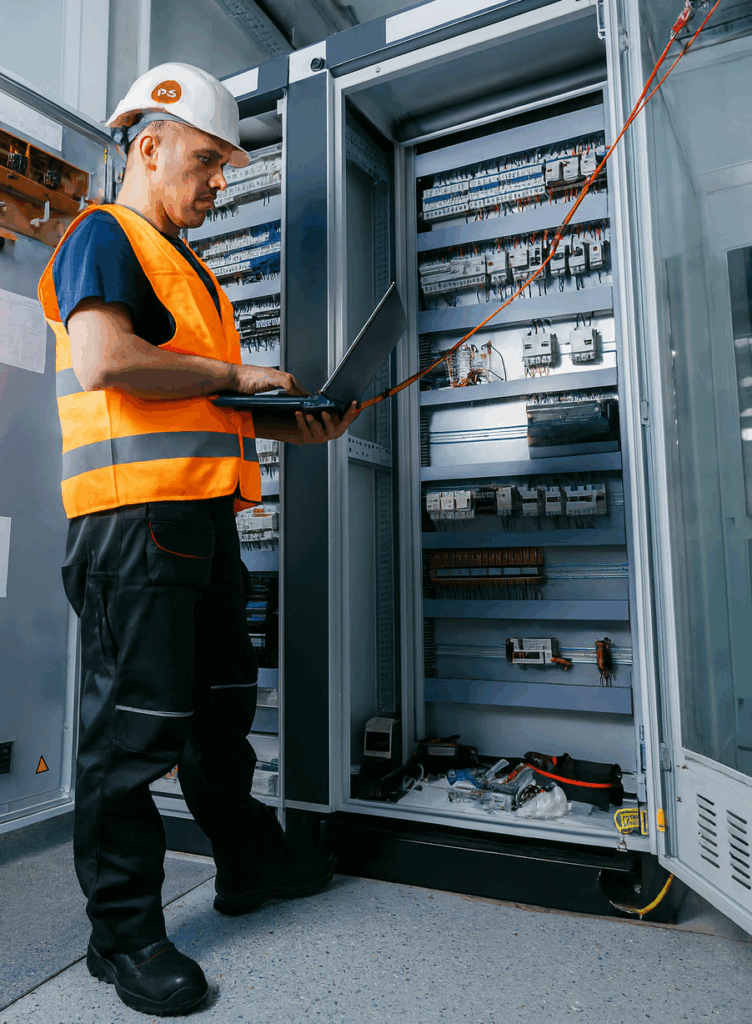
Healthcare is all about safety, reliability and continuity. A brief power failure or a fault in the installation can have direct consequences for patients and staff in a medical environment. This is why there are strict requirements for electrical installations in medically used areas, such as operating theatres, treatment rooms, intensive care units, dental practices, private clinics and animal clinics (veterinary clinics).
Why special requirements?
In an ordinary home or office space, the chances of a fault in the installation posing immediate danger to life are relatively small. In a hospital or clinic, the situation is different. Here, patients often depend on medical equipment that is in direct contact with the body. Think of ventilation equipment, diathermy units or monitoring systems.
A small voltage difference or excessive leakage current can be dangerous in such situations. That is why the NEN 1010 standard (supplementary chapter 710) sets specific rules for electrical installations in medical rooms.
Key concerns in healthcare
- Reliable power supply: Medical rooms should be connected to separate power supplies with emergency power supply (UPS or emergency generator) so that equipment and lighting continue to function in case of mains failure.
- Settlement systems and security: special earthing systems and insulation monitoring reduce the risk of dangerous leakage currents.
- Redundancy: Double supply circuits are often used, so that if one circuit fails, equipment can continue to run.
- Regular inspections: installations must be periodically tested according to NEN 3140 and other inspection standards required by insurers and regulators.
What does this mean for healthcare institutions?
For hospitals, private clinics and healthcare institutions, it is essential to partner with a qualified fitter experienced in medical installations. Not only in new construction and renovation, but also in periodic maintenance and inspections.
A good installation partner thinks about:
- Designing and expanding the distribution cabinet and subdivisions.
- Installing emergency power solutions.
- Realising secure ICT and data networks for medical devices.
- Performing inspections and maintaining reports.
Conclusion
Electrical safety in medically used areas is not a luxury, but a necessity. By working with a specialised installer, a healthcare institution can be confident that its patients and staff are protected from risk, and that the continuity of crucial processes is ensured.
At RS Installation Group BV, we combine technical knowledge with years of experience in the healthcare sector. We ensure that electrical installations are safe, reliable and future-proof.